A Supply & Demand zone is a price area where large buy (Demand) or sell (Supply) orders are waiting: typically from banks and large institutions. When price returns to the zone, a strong reversal often occurs because the resting orders are not yet filled. Accurately marking zones = reading Smart Money's intent.
Core Concepts of Zone Trading
Demand Zone
Zone with large buying pressure waiting: price tends to reverse upward when it returns
Supply Zone
Zone with large selling pressure waiting: price tends to reverse downward when it returns
Fresh Zone
An untested zone: higher chance of reaction than a Tested Zone
Base Candle
Small-body candles preceding an impulsive move: where institutions accumulated orders
Structure of a Zone
A quality zone comes from 3 connected parts: candles leading in (leg-in), base candles where institutions accumulated position, and candles leaving strongly (leg-out). The stronger and faster the leg-out, the bigger the orders hidden in the zone.
Leg-In
Candles approaching the base
Base
1–3 small-body candles stacking orders
Leg-Out
Impulsive candles leaving the zone
Zone Pattern Types
Supply & Demand has 4 main patterns based on direction: each tells you a different market context:
- Drop-Base-Rally (DBR): down, base, up = Demand Zone
- Rally-Base-Rally (RBR): up, pause, up = Demand Zone (continuation)
- Rally-Base-Drop (RBD): up, base, down = Supply Zone
- Drop-Base-Drop (DBD): down, pause, down = Supply Zone (continuation)
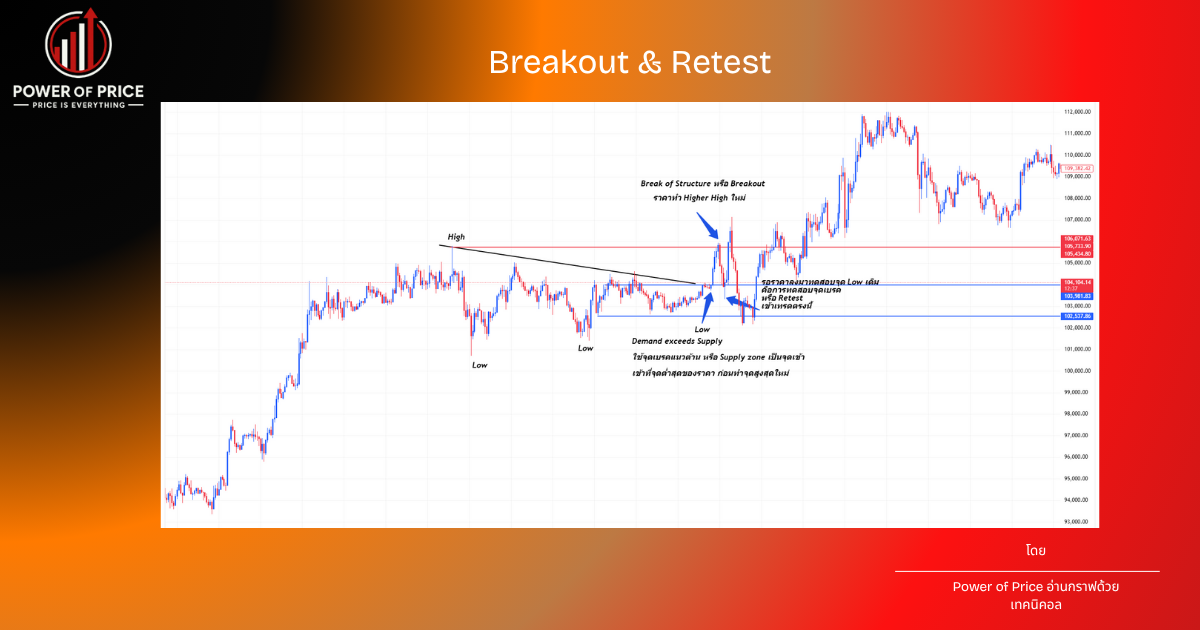
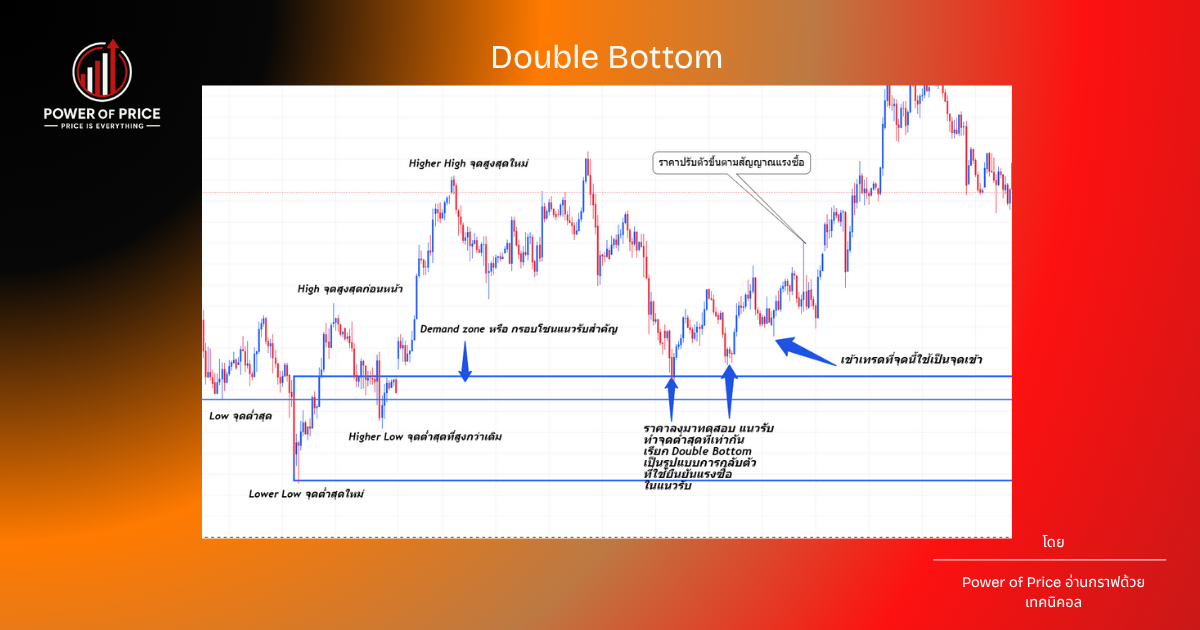
Double Bottom at a Demand Zone
When price tests the Demand zone a second time without making a new low and starts forming higher lows, it confirms buyers are still present: a Double Bottom forming inside a key zone gives a high-probability reversal.
Zone Quality
Not every zone reacts the same. What makes a zone high quality:
- Fast, strong leg-out: shows large hidden orders
- Still a Fresh Zone: never retested before
- On a Higher Timeframe: H4/Daily zones are stronger than M5/M15
- Preceded by a Liquidity Sweep: price collected liquidity before forming the zone
- Aligned with Market Structure: never trade zones against the bigger trend
The highest quality zone = a Fresh HTF zone aligned with market structure, formed after a liquidity sweep: waiting for this combination takes patience but delivers an extremely high win rate.
How to Enter at a Zone
There are 3 entry styles popular with zone traders:
- Set Limit Order: place an order at the edge of the zone in advance
- Wait for Confirmation: wait for an LTF reversal pattern before entry to reduce zone-fail risk
- Scale-In: split the entry: half at the zone edge, half at mid-zone
Common Mistakes
Marking Every Swing as a Zone
Not every swing high/low is a zone. You need a clear base candle AND an impulsive leg-out: not just direction change.
Trading Tested Zones Over and Over
Zones weaken with every test: chances of break increase. Focus only on Fresh Zones.
No Stop Loss Behind the Zone
Zones can fail at any time. Place SL at least 10–15 pips beyond the zone to buffer from noise.
Checklist Before Trading Supply & Demand
- Identify clear base candles and leg-out
- Confirm it's a Fresh Zone (never retested)
- Zone aligned with HTF market structure
- Calculate RR at least 1:3 before entry
- SL behind zone, TP at next key level
- Wait for LTF confirmation if unsure